
Overview - Surah 6: al-An`am (The Cattle)
In this Surah the message of Tawhid is highly emphasized. It contains basic principles of Tawhid. It gives beautiful descriptions of Allah's creative power. It criticizes Shirk and its manifestations. Basic topics discussed here are:
- Oneness of Allah is the reality in this universe.
- Polytheism has no foundation.
- Prophet Ibrahim - peace be upon him - preached Tawhid. Other Prophets also gave the same message.
- Allah's judgment will come and the truth will prevail.
- Allah gives right guidance about food and other matters of life.
Sections:
- Allah created the heaven and earth but the non-believers call others equal to Allah.
- Allah’s punishment came upon those who denied the truth.
- On the Day of Judgment the Mushrikin will admit their guilt.
- Those who deny the Hereafter they are the real losers. Non-believers ridiculed Allah's Prophets, but in the end the truth prevailed.
- Nations were warned before. Allah did try them in various ways.
- Believers should be respected
- Allah is the Final judge and He will decide the destiny of the individuals or nations.
- Allah’s majesty, power and might
- Prophet Ibrahim's arguments against Shirk.
- Other Prophets also gave the message of Tawhid.
- Allah's revelation to His Prophets.
- Allah's signs in the creation.
- Allah has no partner, no son.
- Arrogance of the non-believers and their opposition to the Prophets. Do not eat the animals slaughtered in the name of any one other than Allah.
- Those who plot against Allah, they suffer themselves.
- Superstitions of the Mushrikin.
- Allah's gifts for humanity and people's self-imposed prohibitions.
- What are the things that Allah has forbidden?
- Universal principles of Islam.
- The true religion: prayer, sacrifice, life, death, everything must be for Allah.
The name of the Surah is al-An’am [Cattle] and it consists of 165 Ayaat.
Overview
| Total Ayat | 165 |
| Total Words * | 3050 |
| Root Words * | 435 |
| Unique Root Words * | 12 |
| Makki / Madani | Makki |
| Chronological Order* | 55th (according to Ibn Abbas) |
| Year of Revelation* | 13th year of Prophethood |
| Events during/before this Surah*
, 2nd Pledge of Aqabah, 1st Pledge of Aqabah, Death of Abu Talib - Death of Khadijah - Stoning at Ta'if - al-Isra wal Mi'raj - Night Journey, Boycott of Banu Hashim Yr 3, Boycott of Banu Hashim Yr 2, Boycott of Banu Hashim Yr 1, 2nd Migration to Abyssinia, Physical beating and torture of some Muslims - 1st Migration of Muslims to Abyssinia, Public Invitation to Islam - Persecution of Muslims; antagonism - ridicule - derision - accusation - abuse and false propaganda., Revelation begins - Private Invitation to Islam , Revelation begins - Private Invitation to Islam , Revelation begins - Private Invitation to Islam
| |
| Events during/after still to occur*
Migration from Makkah to Madinah - Building of Masjid Nabi in Madinah - Treaty with Jews of Madinah - Marriage of Prophet to Aishah,Change of Qiblah from Jerusalem to Makkah - Battle of Badr,Battle of Uhud,,Battle of Ahzab - Expedition of Banu Quraydhah,Treaty of Hudaiybiyah - Letters to Kings and Rulers,,Conquest of Makkah - Battle of Hunain,Hajj led by Abu Bakr - Expedition of Tabuk,Farewell Hajj by Prophet - Death of Prophet - End of Divine Revelation
| |
| Names of Prophets Mentioned
Nuh, Lut, Ibrahim, Ismail, Ishaq, Yaqub, Yusuf, Ayyub, Musa, Harun, Dawud, Sulayman, Ilias, Alyasa, Yunus, Zakariya, Yahya, Isa
| |
| Surah Index
Aaron, Abraham, Adversity (not burdened beyond capability to withstand) , Adversity (not burdened with another’s burden) , God (knows that beyond comprehension) , God (made no laws regarding that of which He didn’t speak) , Angels, Astronomy (celestial mechanics) (solar and lunar orbits), Astronomy (celestial navigation) , Azar, Beasts, Behaviour (be just in your opinions) , Birds, Business (be fair in dealings) , Children (do not kill for fear of poverty) , Children (pre-Islamic customs of slaying children) , Commandments (general religious) , Commandments (leave company of those in the act of mocking God’s law) , Creatures, Customs, David, Death, Death (those communities who have no revelation will not be destroyed) , Disbelievers, Disbelievers (ask Muhammad to invoke God’s wrath upon them as proof) , Disbelievers (God’s promise to) , Disbelievers (leave company of those in the act of mocking God’s law) , Disbelievers (relationship to belivers) , Earth, Elijah, Elisha, Food (blessing of) , Food (forbidden) , Food (lawful) , Friends (leave company of those in the act of mocking God’s law) , Guardianship (proper conduct of) , Health rules (food) , Heaven (several) , Hell, Humankind (creation of) , Humankind (creation of) (from clay), Iblis, Idolatry (forbidden) , Isaac, Ishmael, Jacob, Jews (and Christians) (food restrictions), Jews (foods which are forbidden for) , Jinn, Job, John the Baptist, Jonah, Joseph, Judgement, Judgement (Day) , Judgement (use reason) , Killing, Killing (don’t) , Knowledge (obligation upon man to obtain and impart) , Knowledge (study nature to acquire) , Lot, Mockery (leave company of those in the act of mocking God’s law) , Moses, Muhammad (only a prophet) , Noah, Prophet (people who are false prophets are wicked) , Prophet (purpose of) , Religion, Religion (falsely follow other people’s conjectures) , Religion (is not play and transient delight) , Religion (wickedness of attributing one’s own lying inventions to God) , Religious (sects) , Resurrection, Resurrection (Day) , Resurrection (of soul) , Revelation, Sea, Sexes (created from one living entity (soul)) , Sexes (equality of) , Sin, Solomon, Torah, Weather (rain) , Zachariah
| |
Islamic Creed. This Surah mainly discusses the different aspects of the major articles of the Islamic Creed: Monotheism, life after death, Prophethood and their practical relevance to human life. It also refutes the erroneous beliefs of those opposing it and answers their objections, warning and admonishing them. Furthermore, it comforts the Prophet and his followers who were suffering from persecution. Of course these themes have not been dealt with under separate headings, but have been blended together in an excellent manner.
Establishing the Hujjah [proof against]. The Aqeedah [belief] of the Disbelievers is categorically deconstructed and refuted from various perspectives.
The Surah has been mentioned as al-An’am [The Cattle] as many of the rulings concerning the different types of cattle are mentioned in this Surah.
Whether one analyses the different al-An’am [cattle] biologically or manners of behaviour, they are are amongst the greatest evidences in demonstrating Tawheed [Oneness of God].
Manuscripts / Inscriptions
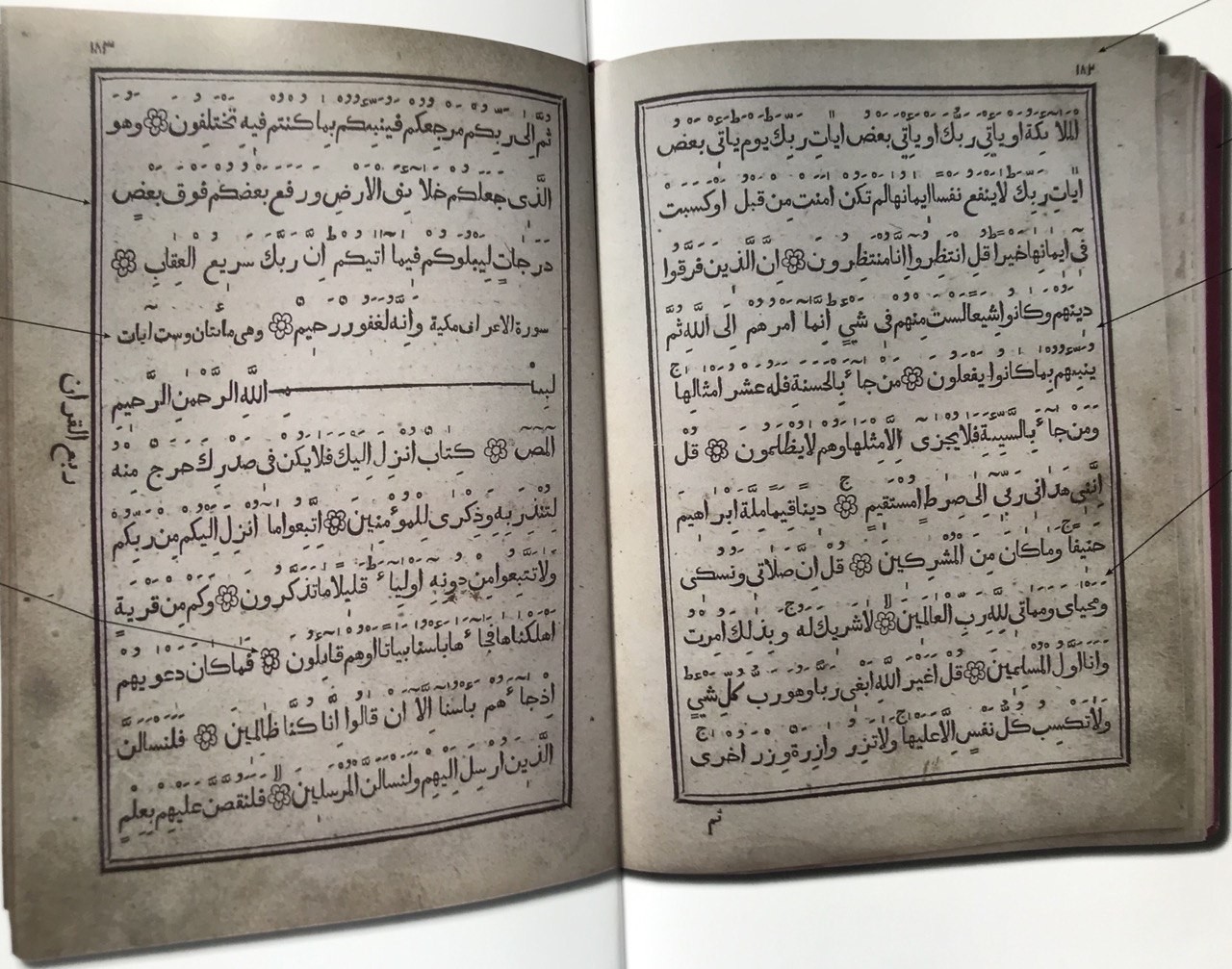
1860 CE
1860 CE

19th Century
19th Century
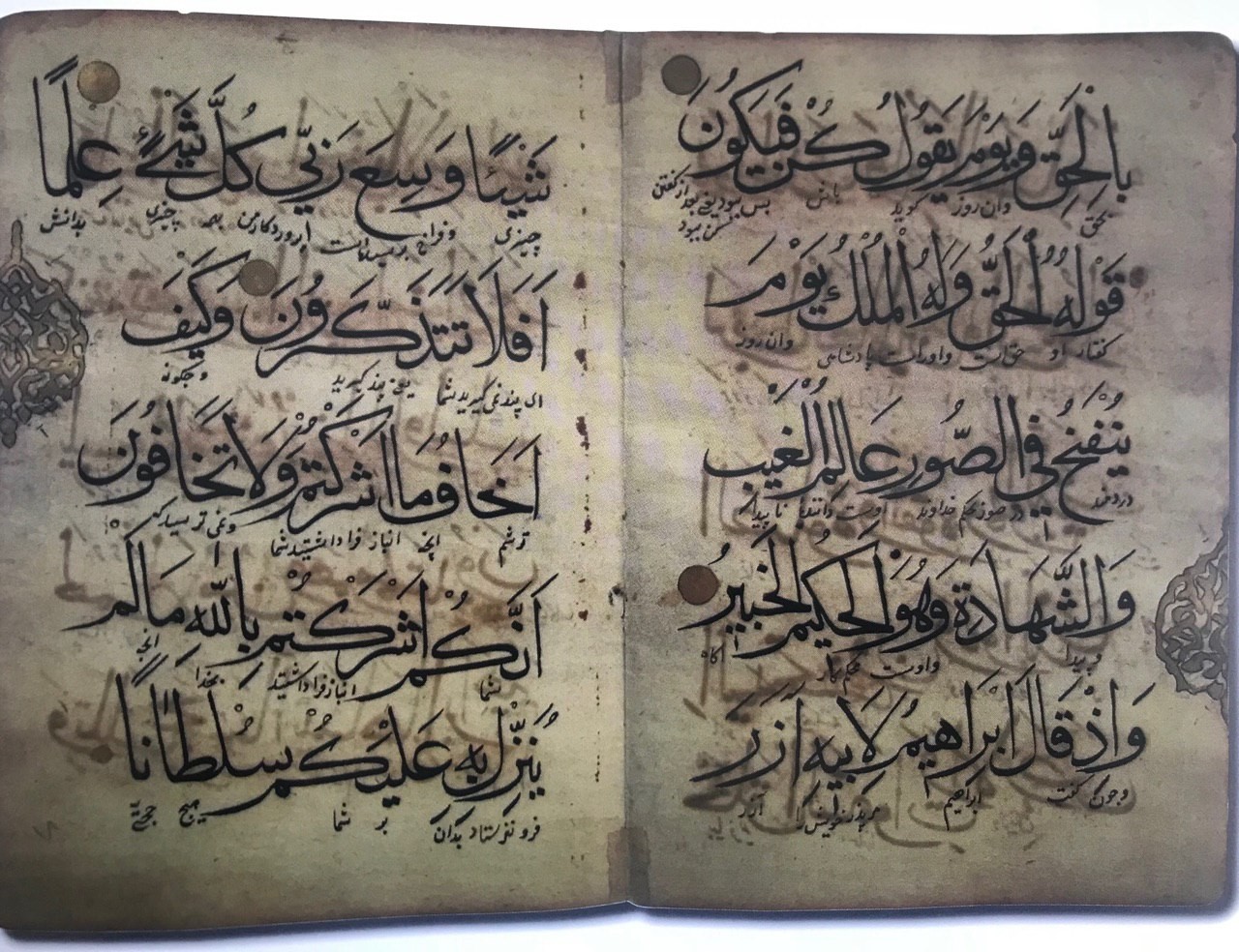

734 H 1334 CE
734 H 1334 CE

1130 AH (1717 CE)
1130 AH (1717 CE)

1st Century Hijrah (7th Century CE)
1st Century Hijrah (7th Century CE)

1st Century Hijrah
1st Century Hijrah

1st Century Hijrah
1st Century Hijrah
- Ibn Abbas said, "All of Surat al-An’am was revealed in Makkah at night, accompanied by seventy thousand angels, raising their voices in glorification of Allah'' [At-Tabarani as mentioned by Ibn Kathir]
- It was written down by the scibes the same night that it was revealed.
- The Prophet said, “I was given in place [position] of the Torah, the Seven [surahs] and in the place of the Zabur, the Hundred [those surahs which have a hundered ayat or so] and in place of the Injeel the al-Mathani [the oft-repeated] and was additionaly honoured by the Mufassil.” [Musnad Ahmad no. 17023]
- The Prophet Ilyas is only mentioned in this Surah and in Surah as-Saffaat.
- The word قل Qul - "Say" has the highest frequency in Surah al-Anam compared to all other Surahs. [confirmation needed]
- The word هو - Huwwa "He" - has the highest frequency in Surah al-Anam compared to all other Surahs. [confirmation needed] - If you want to know about Him.....this Surah will inform you.
Total Word Count per Ayat (shows how many words per Ayat) = 12* | ||
| # | Root Word | Frequency in Surah | Frequency in Qur'an |
|---|---|---|---|
| 1. | أ ل ه | 93 | 2851 |
| 2. | ق و ل | 87 | 1722 |
| 3. | ك و ن | 64 | 1390 |
| 4. | ٱلَّذِى | 63 | 1464 |
| 5. | ر ب ب | 53 | 980 |
| 6. | ع ل م | 44 | 854 |
| 7. | ش ي أ | 39 | 519 |
| 8. | إِلَّا | 37 | 663 |
| 9. | أ ي ي | 32 | 382 |
| 10. | إِلَىٰ | 31 | 742 |
| Root Word | Frequency in Surah |
Frequency in Qur'an |
|---|---|---|
| أ ل ه | 93 | 2851 |
| ق و ل | 87 | 1722 |
| ك و ن | 64 | 1390 |
| ٱلَّذِى | 63 | 1464 |
| ر ب ب | 53 | 980 |
| ع ل م | 44 | 854 |
| ش ي أ | 39 | 519 |
| إِلَّا | 37 | 663 |
| أ ي ي | 32 | 382 |
| إِلَىٰ | 31 | 742 |
According to Ibn Abbas, the whole of the Surah was revealed at one sitting at Makkah [during the night]. Asma bint Yazid says, ‘During the revelation of this Surah the Prophet was riding on a she-camel and I was holding her nose-string. The she-camel began to feel the weight so heavily that it seemed as if her bones would break under it.’ We also learn from other narrations that it was revealed during the last year before the migration (Hijrah) and that the Prophet dictated the whole of the Surah the same night that it was revealed. [Mawdudi]
After determining the period of its revelation it is easier to visualize the background of the Surah. Twelve years had passed since the Prophet had been inviting the people to Islam. The antagonism and persecution by the Quraysh had become most savage and brutal and the majority of the Muslims had to migrate to Abyssinia. Additionally, the two great supporters of the Prophet, Abu Talib and his wife Khadijah were no longer there to help him, so he was deprived of all worldly support. In spite of this he carried on his mission. As a result of this all the good people of Makkah and the surrounding clans gradually began to accept Islam but there the community as a whole was still bent on obstinacy and rejection. Therefore if anyone showed an inclination towards Islam they were subjected to taunts and derision, physical violence and social boycott.
It was in these dark circumstances that a ray of hope gleamed from Yathrib, where Islam began to spread freely by the efforts of some influential people of the tribes of Aws and Khazraj, who had embraced Islam at Makkah. At that time, none but God knew the great hidden potential in this.
To a casual observer it appeared as if Islam was a weak movement, with no material backing, except for some limited support from the Prophet's own family and a few poor followers. Obviously the latter could not give much help because they themselves were being persecuted.
- Refutation of shirk and guidance towards Tawhid (Oneness of God). Reality of the life after death and the Day of Judgement.
- Clarification of self-imposed prohibitions that were falsely attributed to Allah.
- The fact that Allah's commandments are not irrational taboos, but form the fundamental moral principles of the Islamic society.
- Answers to objections raised against the person and the mission of the Prophet.
- Comfort and encouragement is provided to the Prophet and his followers who were at that time in a state of anxiety and despondency.
- Admonition, warnings and threats are given to the disbelievers to give up their apathy and haughtiness.
- Prohibition of dividing the religion into sects.
- Allah requires the Believers to declare: "My Salah, my devotion, my life and my death are all for Allah."
Tafsir Zone
|
Sayyid Qutb Overview (Verses 46 - 49) Important Points for Reflection As the sūrah moves on, it puts those who associate partners with God face to face with His might and how it may strike them personally, taking away their hearing and eyesight and sealing their hearts. They are defenceless against it, and they can find no deity other than God to return what God may take away from them. The scene depicted here is very vivid, showing them their total powerlessness against God’s might. It also paints for them the stark reality of those partners they associate with God when they have to face a truly grave situation. The scene shakes them violently. God, the Creator of human nature knows how far it is affected by this scene and the truth it describes. Human nature realizes that God is able to take away people’s hearing and sight and seal their hearts. None of these organs can then function at all. Should He do this, there is no other deity to reverse what He has done. As this scene sends a shiver into people’s hearts, it shows how hollow and erroneous the concept of idolatry is. The sūrah wonders at those who are shown different, wide-ranging and multi-faceted signs, beckoning them to faith, and yet still they turn away. Here, their attitude is painted in the image of a camel which has a particular disease in its legs, causing it to limp outwardly as it walks. The scene was familiar to the Arabs who were the first to be addressed by the Qur’ān. It fills us with a feeling of contempt for those who turn away: “See how varied and multifaceted We make Our signs, and yet they turn away!” (Verse 46) They are hardly allowed to take their breath before they are put face to face with another possibility that may well not be far away from them. They are shown their own destruction as they are indeed the wrongdoers, a term which is often used interchangeably with those who associate partners with God. The scene here paints the destruction of the wrongdoers when they are taken unawares or when God’s punishment is inflicted on them in open daylight: “Say: Do but consider, if God’s punishment befalls you suddenly or in a perceptible manner, would any but the wrongdoing folk be destroyed?” (Verse 47) Divine punishment may come in any form and in any situation. Whether it comes suddenly when least expected or it comes gradually, in broad daylight when they are fully prepared, total destruction would be the lot of the wrongdoing folk, a description often used in the Qur’ān to refer to the idolaters. This punishment will be visited on them alone. They cannot protect themselves against it whether it comes suddenly or openly, for they are too weak to repel it. Nor can any of the partners they associate with God spare them this punishment, because those partners are among God’s servants who are equally weak and powerless. The sūrah raises this prospect before them, so that they may take the necessary steps to avoid it before it happens. Limitless is God in His glory: He knows that this prospect touches certain cords within human nature which know and truly fear what it entails. When this passage of warning has reached its peak, having portrayed several scenes, making inspiring comments on each of them and giving serious warnings which have their effect on people’s hearts, it is concluded with a statement outlining the task of God’s messengers. Their communities demand supernatural miracles but their duty is merely to convey a message, bringing happy news and giving stern warnings. They have no say in people’s fate, which is determined by the attitudes people choose to adopt for themselves: “We send Our messengers only as bearers of good news and as warners. Those who believe and act righteously shall have nothing to fear, nor shall they grieve. But those that deny Our revelations shall be afflicted with suffering as a result of their sinful deeds.” (Verses 48-49) This faith of Islam began by preparing mankind for a stage of maturity which would enable it to use fully God’s great gift. With such usage people recognise and understand the truth which the Qur’ān reveals and to which it directs human intellect. Numerous signs pointing to this truth are present everywhere in the universe, as well as in the different stages of life and in every aspect of creation. To attain such maturity requires a complete departure from the stage of physical miracles which confront those who deny the truth with what forces them to submit. Instead, the human intellect is directed to observe the final touches of what God creates in the whole universe. These are indeed miraculous, but they are permanent miracles upon which the whole universe is founded. The human mind is addressed with a superb book revealed by God, which is absolutely miraculous in its style, method and the social set-up it aims to create. This set-up remains unique, with nothing similar having ever existed previously or since. For the human intellect to be familiar with this new high level which the departure from physical miracles represents, man has undergone careful education and instruction. This was necessary for man to begin to read the open book of the universe with his mind, under divine guidance and according to Qur’ānic directives and the Prophet’s teachings. Such reading should combine positive realism with the recognition of what lies beyond the realm of human perception. It should steer away from those abstract concepts that characterise a part of Greek and Christian philosophies, as well as the materialistic concepts which pervaded parts of Greek philosophy as well as Indian, Egyptian, Buddhist and Magian philosophies. Needless to say, it also required the discarding of naïve materialism characterized by some ignorant Arabian beliefs. Part of that education was represented by the definition of the task of God’s Messenger and the nature of his role with regard to the divine message. The Messenger is a human being to whom God assigned the task of giving happy news as well as warnings. When he had completed that, his task was fulfilled and the response was left to human beings to determine. God’s will operates through this response and the reward or punishment is determined on its basis. He who believes and does good works need not worry about what he may encounter, or grieve over what he might have done. If he has slipped, he will be forgiven. If he has done well, he will be rewarded for it. But those who deny the signs the Prophet has brought, and to which their attention has been drawn, will have to be punished for their disbelief, or for “their sinful deeds”, to use the relevant reference in this passage. We should remember that the Qur’ān often uses the terms `wrongdoing’ and `sinful deeds’ to denote associating partners with God and total disbelief. The result is a plain concept, which has no complication or ambiguity, and a clear outline of the Prophet’s task and his terms of reference. According to this concept, all attributes of Godhead are given to God alone. Everything happens by God’s will. But within that framework, man is given freedom of action and is required to account for what he chooses. The divergent destinies of God’s obedient servants and those who disobey Him are described in perfect clarity. All legends and arbitrary concepts that have prevailed in jāhiliyyah societies about the role of the Messenger are shown to be false. All this helps elevate mankind to maturity without letting it drift into the maze of abstract philosophies and futile arguments which continue to waste the energy of the human mind for generation after generation. |
Ibn Kathir (English)
Sayyid Qutb
Sha'rawi
Al Jalalain
الطبري - جامع البيان
ابن كثير - تفسير القرآن العظيم
القرطبي - الجامع لأحكام
البغوي - معالم التنزيل
ابن أبي حاتم الرازي - تفسير القرآن
ابن عاشور - التحرير والتنوير
ابن القيم - تفسير ابن قيّم
السيوطي - الدر المنثور
الشنقيطي - أضواء البيان
ابن الجوزي - زاد المسير
الآلوسي - روح المعاني
ابن عطية - المحرر الوجيز
الرازي - مفاتيح الغيب
أبو السعود - إرشاد العقل السليم
الزمخشري - الكشاف
البقاعي - نظم الدرر
الهداية إلى بلوغ النهاية — مكي ابن أبي طالب
القاسمي - محاسن التأويل
الماوردي - النكت والعيون
السعدي - تيسير الكريم الرحمن
عبد الرحمن الثعالبي - الجواهر الحسان
السمرقندي - بحر العلوم
أبو إسحاق الثعلبي - الكشف والبيان
الشوكاني - فتح القدير
النيسابوري - التفسير البسيط
أبو حيان - البحر المحيط
البيضاوي - أنوار التنزيل
النسفي - مدارك التنزيل
ابن جُزَيّ - التسهيل لعلوم التنزيل
علي الواحدي النيسابوري - الوجيز
السيوطي - تفسير الجلالين
المختصر في التفسير — مركز تفسير
|
|
|
Scientific References
Chlorophyll – The Green Pigment
‘Chlorophyll’ is the only ‘factory’ on Earth that produces food: it is the green pigment that con-verts energy from the sun’s energy, carbon dioxide and water to produce food for man and animals and this is referred to as ‘chlorophyll a’. ‘Chlorophyll b’ has a different molecular structure and converts light energy from the sun, followed by a complex chemical reaction that produces sugar and then starch. Therefore, the basis of the formation of seeds and fruits is this green ‘factory’.
وَهُوَ الَّذِي أَنْزَلَ مِنَ السَّمَاءِ مَاءً فَأَخْرَجْنَا بِهِ نَبَاتَ كُلِّ شَيْءٍ فَأَخْرَجْنَا مِنْهُ خَضِرًا نُخْرِجُ مِنْهُ حَبًّا مُتَرَاكِبًا “And it is He who sends down rain from the sky, and We produce thereby the
growth of all things. We produce from it [khadran] greenery from which We produce grains arranged in layers....”(6:99)
Scholars of Qur’ānic exegesis said ‘khadran’ means something green. Qurtubi, a classic scholar of Qur’ānic commentary, explained the verse, “We brought forth from the plants something green” and Ibn al-Jawzi further explains, “We bring forth from it, that is – from the green thing – clustered grains like wheat and barley [etc].” So from this ‘green substance’ are the fruits and seeds produced.
Behavioural Patterns of Species are like Humans
وَمَا مِن دَابَّةٍ فِي الْأَرْضِ وَلَا طَائِرٍ يَطِيرُ بِجَنَاحَيْهِ إِلَّا أُمَمٌ أَمْثَالُكُم ۚ مَّا فَرَّطْنَا فِي الْكِتَابِ مِن شَيْءٍ ۚ ثُمَّ إِلَىٰ رَبِّهِمْ يُحْشَرُونَ "And there is no creature on [or within] the earth or bird that flies with its wings except [that they are] communities like you. We have not neglected in the Register a thing. Then unto their Lord they will be gathered." (6:38)
Key words – إِلَّا أُمَمٌ أَمْثَالُكُمْ – ‘communities like you [i.e. humans]’ – Here the Creator informs us that the community structure and behavioural patterns of every single set of species in existence [as God does not exclude any] is similar مثل to how we as human beings are – some of us live as married couples, single parents, groups of small family, large tribes, etc.
God has made some animals smart and resourceful and others relaxed and trusting. Some insects store a year’s worth of food for themselves, and others rely on the fact that daily provi-sion is guaranteed for them. Some do not know their offspring at all; some look after their own offspring but not others; some never acknowledge their offspring once they become independent. Some recognise and appreciate kind treatment, whilst for others it does not mean a thing. Some prefer others to themselves, whilst others, if they gain enough to provide for an entire community of their species, will not let any other come near it. Some animals will not harm unless severely provoked, whilst others will hurt without provocation.
Some bear grudges and never forget if someone hurts them, whilst others do not remember at all. Some never get angry, whilst others get angry quickly and are not easily calmed. Some have very precise knowledge of things which most people know nothing about, and some do not know about anything at all. Some learn quickly and some learn slowly. All this points to the similarities of the behavioural patterns of humans and the various species Sufyan ibn Uyaynah, an early Muslim scholar, said, “there is no human being on Earth who does not resemble animals in some way...some run like wolves, some bark like dogs and some flaunt themselves like peacocks. Some people resemble pigs in that if you offer them good food they will not touch it, but if a man gets up from defecating, they will come and roll in it. Hence, you find some people who, if they hear fifty words of wisdom they will not remember anything of that, but if a man does one thing wrong, that will stay in their memory.”
The Qur’an describes the Creator as– الَّذِي أَعْطَىٰ كُلَّ شَيْءٍ خَلْقَهُ ثُمَّ هَدَىٰ “...He who gave everything its creation and then guided [it].” (20:50)
Note - كُلَّ شَيْءٍ – every single entity – From the stars in the galaxies to every living species, to every different type of cell in an organism to the molecular level of an atom - every single entity has its function and role that is inherent within it - i.e. created and then guided. Those who study how species behave, will know that in their own ecosystems, every animal from the lion, the snake to the butterfly - each of them has been born with inherent and instinctive patterns of behaviour that drives and guides them in all aspects of their lives from seeking food to seeking a mate.
- Surah Al-An'am (The Cattle) Saad al Ghamidi https://www.youtube.com/watch?v=TW9qN4th0k8&list=PLhM2xiAUdw2cAqW_o3zZkbhJNw0bnaBZN&index=6
- Surah Al-An'am - Idris Abkar http://youtu.be/wUnp0x51Fkw
- Surah Al-An'am Mahmoud Khalil Al Hussary https://www.youtube.com/watch?v=Nai6OBdYOqc&index=6&list=PLxpAkjlGauHfMFWX22VZWOKpzjr-vH_BM
- Surah Al-An'amMuhammad Al Luhaydan https://www.youtube.com/watch?v=vKpt6uvxOQI&index=6&list=PLxpAkjlGauHfKAYuQLRNAZomoezhfhRZe
- Surah Al-An'am Idris Akbar https://www.youtube.com/watch?v=boXihgOhVis
- Surah Al-An'am Muhammad Minshawi https://www.youtube.com/watch?v=vWU6GUO5bAk&index=6&list=PLxpAkjlGauHdUcO_uc-8F8J2NUQRDZjPG
- Dr Israr Ahmed tafsir Surah Al-An'am (8-72)1 https://www.youtube.com/watch?v=dggZdzu91Os&list=PLB4B8D1654A8BD263&index=33
- Dr Israr Ahmed tafsir Surah Al-An'am (8-72)2 https://www.youtube.com/watch?v=VkqBAh0q1Qk&index=34&list=PLB4B8D1654A8BD263
- Dr Israr Ahmed tafsir Surah Al-An'am (73-129)1 https://www.youtube.com/watch?v=JyGXOaPaY4o&list=PLB4B8D1654A8BD263&index=35
- Dr Israr Ahmed tafsir Surah Al-An'am (73-129)2 https://www.youtube.com/watch?v=FebQZchzSYc&list=PLB4B8D1654A8BD263&index=36
- Dr Israr Ahmed tafsir Surah Al-An'am (130) to Surah Al-A'raf (1-37)1 https://www.youtube.com/watch?v=bT5KFbQdP6s&list=PLB4B8D1654A8BD263&index=37


